But for creatives aspiring to grow in their expertise, the skill of discernment can be surprisingly hard to practice.
At Focus Lab, whenever a creative teammate delivers work for client review, we always include our recommendation, clearly stating which option we believe is best and why. This can feel uncomfortable for many creatives. We love to explore, to wonder, to present a range of possibilities, sailing down every experimental channel in the river of innovation. But when it's time to choose just one? We often freeze at the crossroads. Why?
Fear of being wrong. What if I make the wrong choice?
Lack of self-trust. Who am I to make this decision?
The uncomfortable truth is this: Being a creative expert means being comfortable with the risk of being wrong. It means accepting the responsibility (and sometimes the discomfort) that comes with making high-stakes decisions. And experts don’t always make the right call. Even a good doctor will misdiagnose a patient on occasion. But they always make a decision. And a majority of the time, they're right.
To be a creative expert is to trust yourself. Time and experience help. So do supportive teammates, mentors, and leaders. But in the end, trusting yourself is a choice — one only you can make. And that choice is essential to building true expertise.
Spellbook’s Creative Director Grace Walker spoke at Figma’s conference about challenging her assumptions. Among great advice about pushing through failures and embracing being wrong, she shared the learning that “Web design is not art, it is commerce.” We love a drool-worthy website, but if it doesn’t convert for our clients, it doesn’t work. (Focus Lab gets a shoutout for our rebranding work with Spellbook.)
“Autarchist is a typographic odyssey through the aesthetics of 1970s and 1980s science fiction and horror — a golden age of bold, cinematic visions, pulpy paperbacks, and highly stylized letterforms, often pushing the boundaries of legibility in favor of a thrilling blend of futurism, psychedelia, and art nouveau design.” Honestly, we were on board at “typographic odyssey.”
The Ecom Soup team breaks down creativity as a careful balance of inputs (experience, media, nature, etc.) and processing time (space, reflection, activity). They assert that the doom scroll of – possibly very cool – inspiration floods your inputs, and subconsciously threatens your individuality.
From intricate drawings to fashion collections, the traditional pub’s impact on art and culture is strong. “In traditional British pub design, the old ways are just better.”
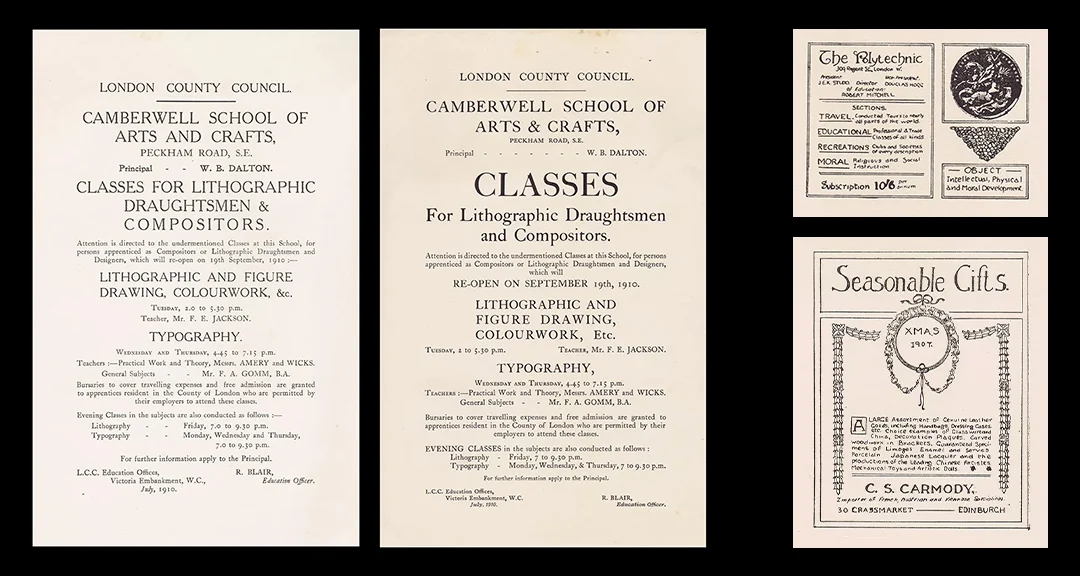
As people crave stability and maturity, print specimens from the early 1900s prove a rich resource for inspiration. In a time when anything feels possible in design, we love the restraint of a well-crafted serif and some typographic hierarchy. Hand-drawn layouts add an extra layer of charm that balances the formal with the whimsical.