Something most founders overlook: investing in your brand creates forced accountability to slow down and think.
Strategic brand thinking doesn't show up in the daily to-do list of a busy CEO or C-Suite. Their focus is on the next most important item, and all the other topics pulling for their attention.
"I didn't expect to have to slow down and talk so much. But, considering we invested money into the effort, I knew it was important to take the project seriously."
That's the forced accountability I'm referring to.
What starts off as a "do I need to be here" mindset, quickly becomes a "We uncovered a ton of clarity in these first few weeks, thank goodness we actually slowed down and had the space to do the deep work and find the core alignment our brand needed."
The accountability to the investment forces conversations that previously didn't have a defined space in your mental and physical calendar.
What story is our business telling? Is it the same story as everyone else? Does it match where the business is going in the next two years?
Those questions don't show up in your week-to-week when the business is businessing. The rebrand "project" creates the timeblock. The timeblock uncovers the clarity. No different than how a personal trainer creates the program and cadence to reach physical goals. We create the cadence and space to reach brand goals.
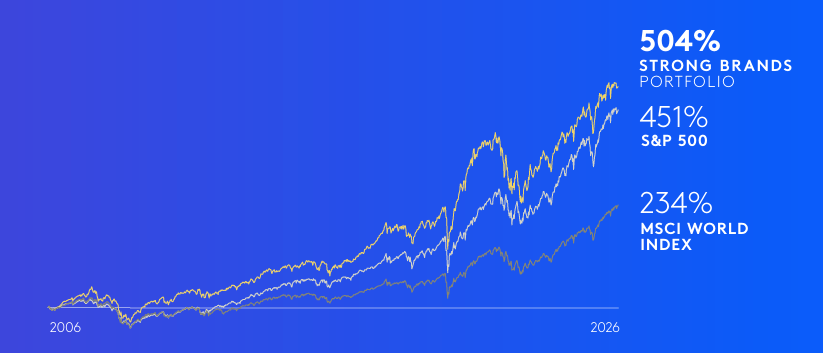
Although brand feels like an easy lever to pull back on when economic times are tough, it's the wrong move. A strong brand sets a company up for better shareholder returns, resiliency, and a quicker recovery when times shift.
"[ANA's executive vice president, Dagmara Szulce] elaborates that when buyers are managing career risk, stakeholder alignment, investment expectations, cybersecurity concerns, and long-term transformation decisions, 'strong brands can reduce uncertainty in complex buying environments.'"
"When AI-generated noise becomes the baseline, personal storytelling becomes the differentiator. Jordache Johnson urged marketers to lean into conviction. 'Take a position in something that costs something,' he advised, arguing that tension and vulnerability are the exact signals of human involvement that machines cannot replicate."
"Brand still matters. It matters more than ever. But brand without AI visibility is a cathedral with no doors." Although LLMs change, your company's reputation is one of the key signals it's considering.
Trying to be everything to everyone is a quick way to be nothing to anyone. "Many brands aim to sound relatable to buyers. Over time, this creates a tone in which everything feels approachable and nothing feels memorable."