"When looking through your case studies, I've noticed the work felt different, especially for B2B. Less safe. More alive."
This was said to me in a sales call this week. It wasn't meant to build me up. There was a question hiding in there. The person I was speaking with essentially wanted to know, "how do you get otherwise safe thinking businesses to push themselves into unfamiliar territory visually and verbally?"
The answer surprised her, because it was not simply about being great "creatives."
Creativity is achieved when you move a client from fear to opportunity. When people begin to fear missing an untapped opportunity with big upside more than the possibility of a misstep, creativity enters the room. And, it just so happens, we're really good at helping people cross that mental chasm during our partnerships.
That shift — from fear to opportunity — is where the magic happens. It's not pixels and words. It's mindset.
When teams stop asking, "What if this goes wrong?" and start asking, "What if this works?" branding stops being defensive. It becomes directional.
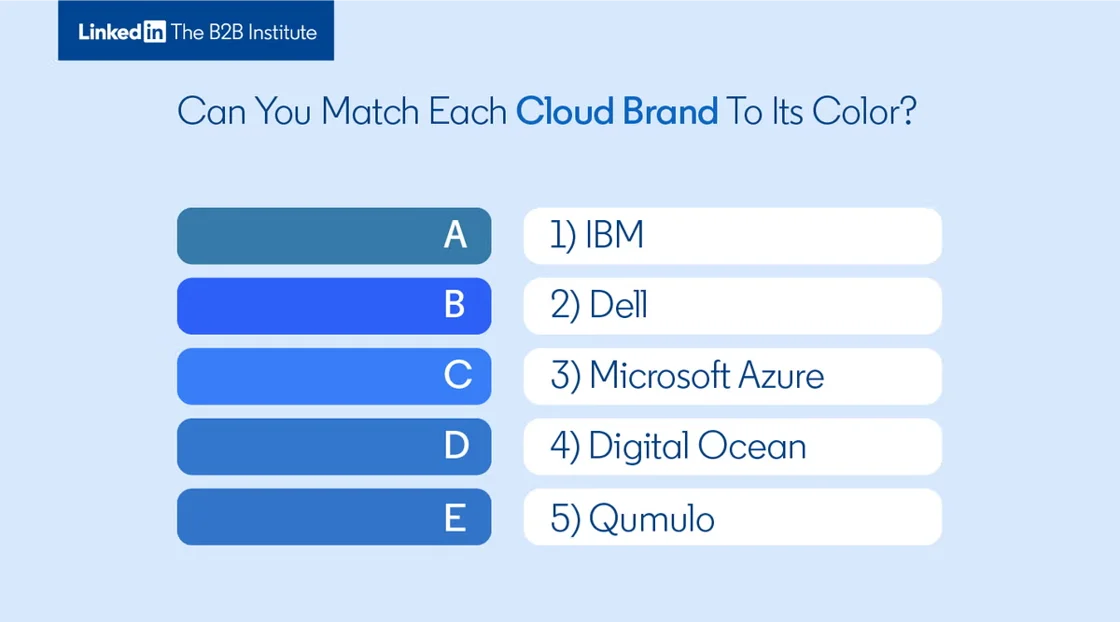
In our Create First newsletter, our creative director declared 2026 the “Year of the Weird.” We’re here for it, and Linkedin’s B2B Institute highlights the consequences of the alternative: The Sea of Sameness.
“In the cloud category, only 5% of the audience associates Dell's shade of blue with the brand, while 10% mistake it for Microsoft. The results are worse for Dell's ads overall — only 2% correctly link them to Dell, while 11% think they’re from Microsoft, 4% from Amazon, and 3% from IBM.”
Dell’s marketing team is spending a lot of time, effort, and money to boost Microsoft’s brand awareness.
Here’s to hoping 2026 will be the Year of the Weird with bold color palettes and more B2B mascots.
"Integration succeeds when leadership treats marketing not as spend, but as a value-creation engine. CEOs who embed this philosophy across teams build organizations where brand amplifies performance, performance validates brand, and the whole system compounds."
"Brand awareness is essential to secure buy-in from invisible buyers. In fact, target buyers are less influenced by brands in comparison with invisible buyers, who maintain a 70% higher likelihood of turning away a brand that is less well known."
The linear marketing funnel shifted into loops (regularly re-engaging prospects), but considering those invisible stakeholders, loops are becoming ecosystems and "growth becomes less about pushing people through stages and more about enabling participation, contribution, and connection."
"When you stop building a brand, you aren't saving money; you are borrowing from your future self at a high interest rate. Moving to a performance-only model causes median revenue ROI to decrease by 40%."