Old masters aren't on TikTok. They aren't posting content every day. Artemisia Gentileschi isn't on Instagram Reels with a tripod, Hokusai isn't posting a day-in-the-life. Homer isn't performing a summary of the Odyssey for a one-minute short form video. If they're lucky, a museum might highlight their work or have them on display. But the algorithm doesn't reward dead artists, nor does it reward artists who focus on quality and depth over quantity.
We overindex the value of newness in order to maintain the currency of attention.
While our work in branding needs to keep the cultural pulse of the new, including on social media, we cannot be completely consumed by it, and our work will suffer if we do. That's the tricky part about the new: It's always going to be shiny and enticing.
New knows how to get attention. The old knows how to last.
In branding, we are building for the long-term. We have to balance the creative mast with anchors of historic wisdom. And when working with old stuff, we need to simmer in it, experience it slow. Intentionally seeking the ancient spaces, tumbling through the dusty, overlooked cupboards of art history, mythology, anthropology. Reading myths shaped by word of mouth for thousands of years. Observing architecture that has lasted a millennium, because it was built not for a single-use pop-up marketing event, but for a god.
I would argue the world doesn't need more one-minute hot takes on the latest rebrand. I want to know the last piece of art that stirred your soul. That made you slow down to reread the words because you had never been so gut-punched by letters on a page before. The sculpture that left your mouth gaping open in awe-filled wonder. Or something you yourself took time to create, pouring your heart into it, and are proud to share with the world.
Soak in the old. Drink new in moderation. And know that really good, original, revolutionary things take time.
Designer and art director Eric Hu considers the importance of context in relation to AI imagery, “If I think of myself as a planet and I think of all the images that I could have ever made in this infinite space. I feel in a way like an alchemist where I reach my hand out into that infinite sky [...] But then I assigned the meaning to them.”
From Dropbox to Cannondale, more and more brand guidelines are deviating from the rarely-opened PDF relinquished to a lonely file in some internal database to engaging (and public) websites.
“Michel Pastoureau’s History of Color series titled Pink, asks: ‘Is pink a color in its own right?’ It goes on to note, ‘There are grounds for doubting this or at least asking the question.’ Scientifically speaking, it is ‘neither color in terms of material nor light, but simply a shade of red, absent from the color spectrum.’”
While we don’t know what TikTok will look like in 60-ish days, we never questioned its shaky musical note logo. The mark is just what we associate with the platform. As Michael Bierut has said, a logo is really just “an empty vessel that you pour meaning into.”
In case you missed it last month, an unremarkable brand largely associated with USBs recently rebranded with an unexpectedly bold cyberpunk-esque new identity. As a comment on Youtube said, “the marketing team cooked with this one.”
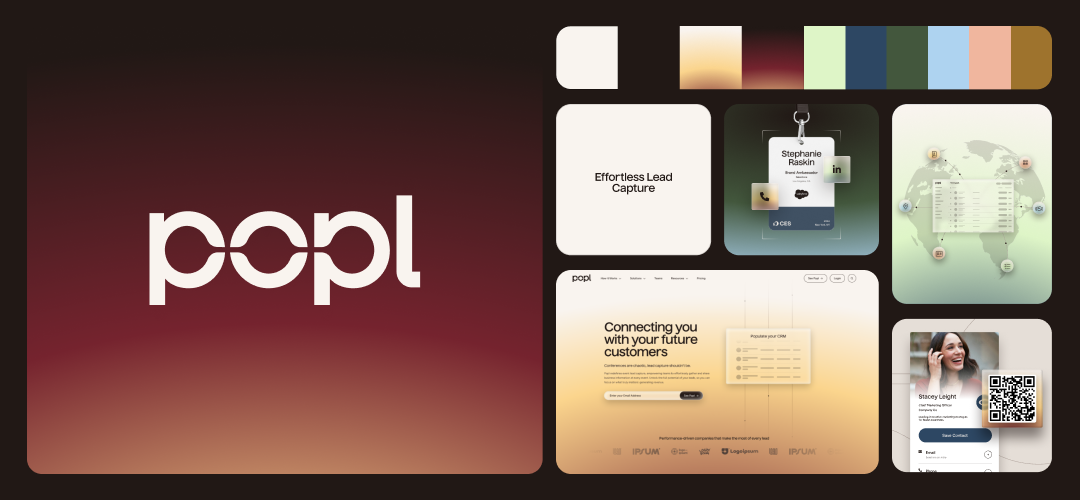
Ready for a more mature brand to match their vision, our friends at Popl just launched their new rebrand, and we’ve got the case study with all the behind-the-scenes.
Founded in 2020, Popl began its journey with a bold vision to revolutionize how people connect. After gaining early traction through Y Combinator, Popl expanded its offerings to provide teams with a seamless, all-in-one solution for digital business cards. By 2025, Popl sharpened its focus, transforming into the go-to platform for in-person lead capture — empowering professionals to turn every handshake into measurable value and every event into a lasting opportunity.