Feedback's in. The client says you missed the mark.
The worst a client can say is "no."
It's taken me years to realize "no" isn't the fire drill I thought it was. And it's not a reflection of my self-worth either.
At Focus Lab, we work iteratively. Fridays are for delivering. Mondays and Tuesdays are for going over feedback with the client.
That rhythm helps us work better together, but it also means opening the door to both great and/or tough feedback.
I used to dread Thursdays. I'd have an artboard full of half-loved, half-hated ideas and a brain full of doubt. What will the client like? Will they say yes? Is this the "right" thing? Will they find out I'm an imposter? I'd be paralyzed by the fear of rejection.
I finally realized "no" wasn't the end of my career. It wasn't proof of failure. It was an opportunity.
To pause. To listen. To ask questions. Sometimes to defend. And always, to lean on your team.
Once I started trusting the process, I started having more fun. I trusted my gut. I got more decisive. I even began sharing totally out-there ideas expecting a "no."
And when it comes? It's just a data point. Not a drama.
Guidelines exist to keep assets on-brand, and LLMs may offer new ways to enforce them. In 2024, Instrument built a GPT experiment that acted as "brand police," scoring inputs for on-brand consistency and explaining its rationale.
With all that Cracker Barrel discourse, Snuggle's rebrand went under the radar. Henkel's press release says the brand has modernized its visual identity with a refreshed bear and logo design that's even cuddlier than before.
Time is scarce on client projects, which is all the more reason not to rush personal ones and "recognize the value that comes with the passing of time itself."
We're forever grateful to the good folks at Present & Correct for scanning design ephemera too good to be lost to time. This time they've scanned various typographic marks from Spain. Gracias!
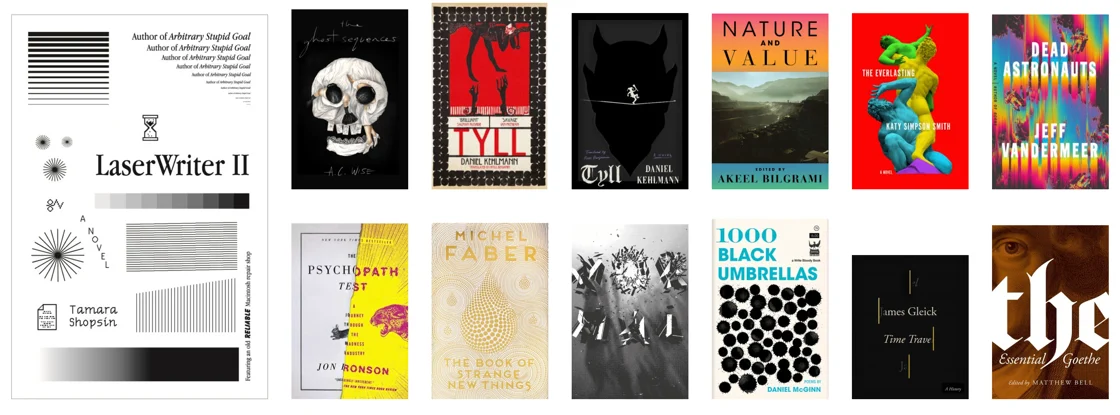
Brand design depends on context — reputation, competitive landscape, and application across media, even down to the bar graph colors accounting will choose. Book covers are a different beast. They stand alone. They must hint at a story without giving too much away. Book covers set the tone for the next couple hundred pages, and are often the reason someone picks the book up in the first place. It’s a tall order, and how designers rise to it is a masterclass in creative problem-solving.
The Book Cover Archive exists “for the appreciation and categorization of excellence in book cover design.”
For more, The Casual Optimist features monthly “Covers of Note” in high-res glory.