I face this question A LOT. At an on-site recently, it came up again. The CEO, who is very technically-minded, was wary that his team did not have the answers they needed to build a successful new brand. In his mind, the customer's perspective is what matters most in driving the right solution. This makes sense at the product level (sometimes), but a brand is built from within.
Great brands don't chase validation — they project conviction.
Interviewing customers can be helpful for identifying pain points, understanding behavior, or fine-tuning product features. But when you rely too heavily on them to define your brand, you risk building a mirror, not a magnet.
Relying on external opinions for brand validation pushes aside the unique perspectives and DNA of the business. It removes the culture, the personality, and the vision that are deeply rooted and required in brand building. Brands are not shaped by what the market thinks they should be. They're grounded in what they are, what they believe, and how they want to show up in the world. That clarity doesn't come from customer quotes. It comes from introspection — knowing your values, your purpose, and what makes you different.
Nike doesn't ask customers if they like the strong social positions it takes. It's part of the brand, and customers have to choose if that's something they align with or not. That comes from how the company was built, the types of talent it attracts, etc.
More often than not, interviewing your team yields the true soul of the business, which becomes the foundation of your brand. It creates a focused and richer result. Not isolated opinions from varied customer backgrounds, which lead to conflicting positions and watered-down solutions.
If you want a brand that inspires trust and earns loyalty, look inward first. Your brand isn't built by committee. It's built by clarity.
"If I had asked people what they wanted, they would have said faster horses." - Henry Ford
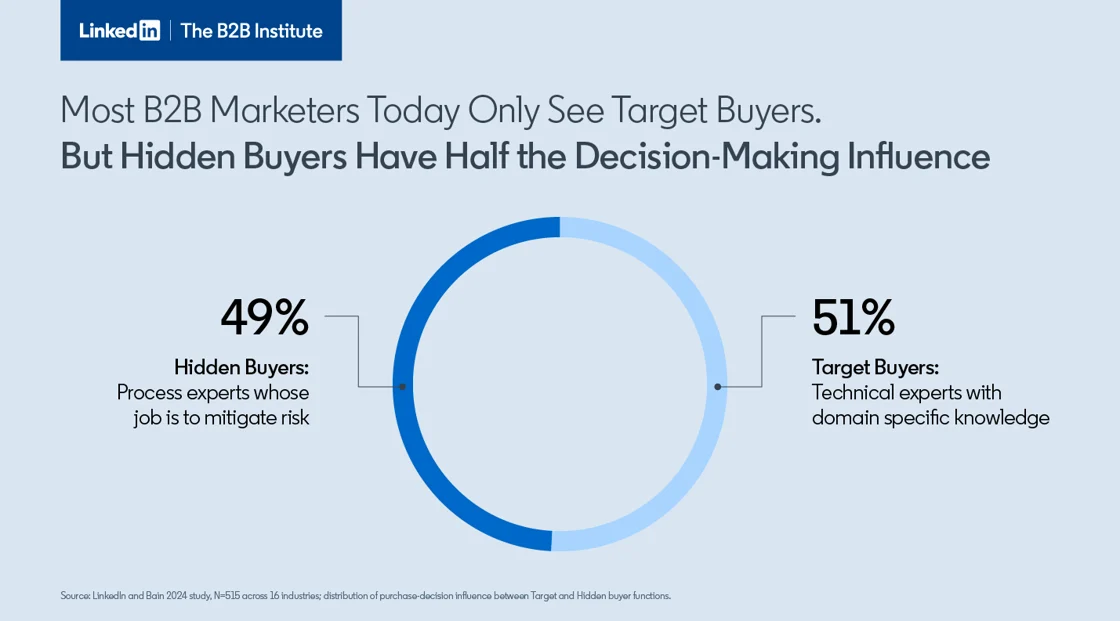
With enterprise-level B2B organizations, decision-making often comes from hidden buyers: “process experts from departments like procurement, finance, legal, and operations.” These internal influences may not understand your feature list, but are looking for minimal risk and safety. From MarketingProfs, “Making up approximately half of the B2B buying influence, the hidden buyers rely heavily on brand signals to evaluate potential vendors, using familiarity as a shortcut to assess risk. Without strong brand recognition, companies struggle to even enter consideration with these crucial decision-makers.” This doesn’t mean your brand needs to be boring, but it does highlight the importance of building brand recognition and repeated exposure beyond your target audience.
“McKinsey found that strong brands generate nearly double the shareholder return of those with weaker names.” Weknowabout rebranding after a merger or acquisition. There’s a lot that goes into deciding between a subtle refresh to maintain brand equity or a bold change to usher in the new. It’s also an argument to rebrand early, while your equity is still growing.
“Your job when marketing to out-of-market buyers is to build and refresh the memory structures that link your company to the needs or challenges your potential buyers are most likely to encounter.” Be memorable and be brief.
After the 2008 crash, “fun” brands were on the rise as a result of the growing distrust in the status-quo. “Approachable language and child-like illustrations adorned the brand identities of job-searches, high-risk investments, car insurance and even funeral care.” But now as people crave the perceived stability of the past, legacy and traditional brands are making a comeback.
“[Today’s buyers are] seeking capabilities that directly support their goals, not just a list of technical specs.” In our brand strategy work, we don’t want a table of features, we want the impact. Meanwhile, features can be copied by competitors, but your brand equity is much more protected.