Yesterday I spent 30 minutes with a client's marketing and design team. I opened with something strange, coming from the guy who runs a brand agency whose team had just delivered their brand guidelines:
Guidelines aren't everything.
They'd just received a beautiful, robust document (and LLM-ready markdown file). Colors. Type. Photography. The works. And underneath all that strategic, beautiful work is always the same looming question: where's the edge of the creative sandbox? What do I do when the guidelines don't serve up the answer I need?
So I showed them our Focus Lab guidelines, and its limitations.
Our guidelines doc (from 2022 at this point) is thin. Four colors. Two typefaces. Some hand-drawn doodles. A collage style. That's basically the end of it. Held up next to theirs, it looks unimpressive.
Then I showed them everything we've made since that isn't in it.
In my opinion, it's impressive. Their word: inspiring.
Here are a few points I made as I went through the images.
Our Focus Lab doodle styles don't match (eek)
There's a doodle with a brushed pen weight. There's another that isn't brushed at all. Some are very thin versus others with varied stroke weight.
Then I showed them a gold doodle (the others in the guidelines were red) that was janky and had an arrow on the end that none of the others did.
Technically? Off brand.
Yet if you zoom out (which I did) and look at all of them together? Unmistakably us.
The guidelines did their best to define how to use our doodle language. But in 2022, we didn't fully know yet. We found out by making things. And in the making, we found our sense of doodle guardrails.
Same lesson, different flavor: we ran into it again with fatigue.
Fatigue in styles
The Focus Lab collage language is core to our identity, so in the first year we found ourselves collaging most things. Blog cards. You will likely do the same. Then you will zoom out again and notice everything starts looking the same. That will start to give you design fatigue.
We didn't discover that in strategy. We found it through practice. We shipped, lived with it, and eventually said that doesn't feel right. Then we adjusted. That's how a brand lives and breathes.
Your guidelines can't tell you everything in advance. Only the work can.
Three zones, not one
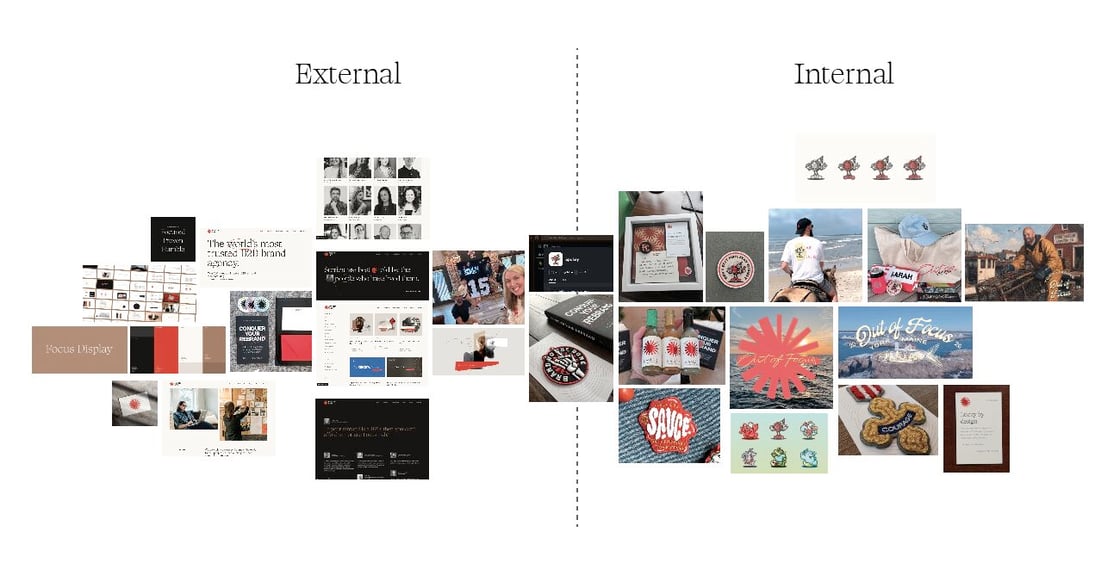
After that, I showed them a map — a spectrum from our tightest, most external brand expression to our loosest, most internal one.
External. Tightest. Customer-facing. Still stretches, but in a narrower zone — e.g., we made one page of our site fully black so it wouldn't look like every other service page.
The middle. The hardest place to dance. This is the blend of your external "professionally consistent brand" and your internal, culturally influenced brand. You're still living by some rules, but you're pushing. This is where judgment matters most.
Internal. Go buck wild. E.g., our retreat brand is called Out of Focus. Every year our team builds a new identity for it — no rules, no approvals, nobody from marketing telling them no. It's where we get to leave the sandbox and find new expressions of our identity that ring true to our team and meet the moment.
Nobody outside is confused, because nobody outside is looking.
Even in our wildest retreat work, there's always a tether to our ethos: our bold red, our mark, maybe a serif typeface, even when it's not our custom brand serif.
Find your anchor, know your ethos, and you've found yourself in a new, wider sandbox to play in.
This took four years
That guidelines doc is from 2022. We're in 2026. We didn't find our way to the inspiring retreat brands until years in. It happened because the need pushed at us: new formats, new moments, and a team hungry to express our creativity. That hunger is our ethos, after all.
From what I see, most organizations grip their brand too tightly. They protect it into something technically correct — and eventually, lifeless.
Brands are living, breathing systems. They have to stretch and express themselves.
The line is further away than you think. Embrace the journey of trying to find it.
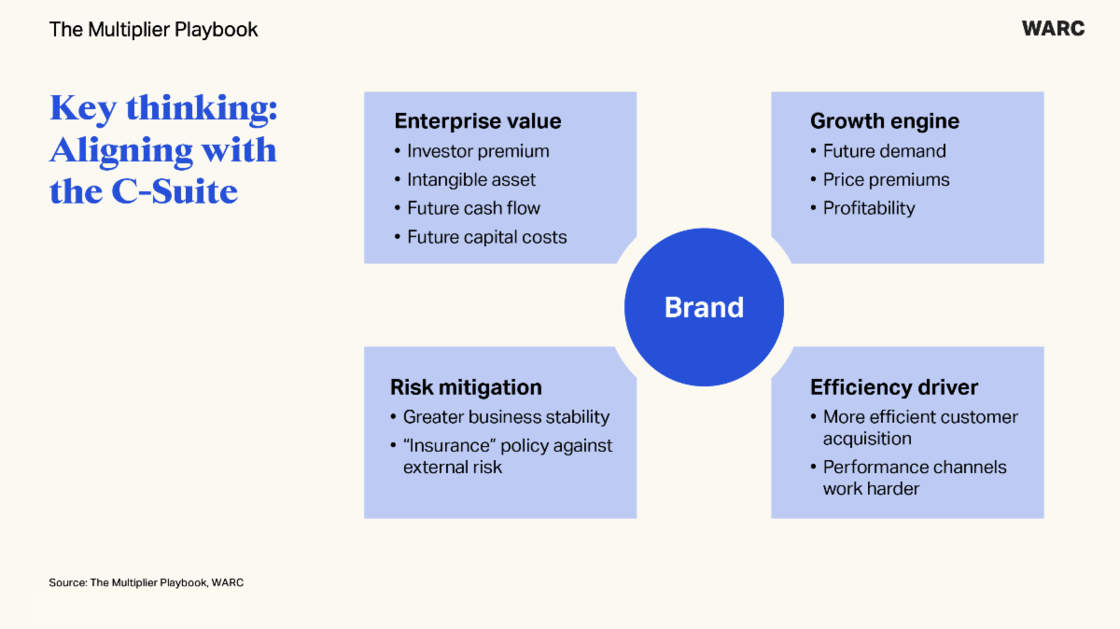
In WARC's The Multiplier Playbook, a survey of 200+ senior U.S. marketers found that 67% of CEOs believe brand is important — but only 19% say their companies routinely connect brand equity to business outcomes, partly because most leadership teams are only looking in one place. Brand touches enterprise value, growth, risk, and efficiency; and most CEOs are only crediting one of them, if that.
1. The ROI of Brand Strategy: How to Make the Business Case“Brand strategy doesn't have an immediate, attributable ROI in the way a paid acquisition channel does. It has a delayed, distributed ROI that shows up in five places: customer acquisition cost, win rate, sales cycle length, pricing power, and team productivity.”
2. Why Belief Is the New Trust for B2B Marketers“Belief is step one on the journey to trust.” Marketing can build credibility and provide testimonials, but then those promises need to be delivered on. It’s similar in branding — a rebrand can’t fix a bad reputation if the underlying issues aren’t solved first.
Forrester found that 94% of buyers use AI in at least one stage of their customer journey. “Leading organizations are investing in discoverability by creating authoritative content, strengthening digital trust signals, maintaining consistent brand representation across channels, and ensuring that information can be easily interpreted by both human buyers and AI systems.”
4. The Age of Generative Engine OptimisationBuilding off Forrester’s findings above, Deloitte goes a step further: discoverability and citability are more important than ever. “The goal is simple: make your brand data so clear, authoritative, and easily extractable that AI models select it as their ‘source of truth.’”