When you work in branding, you work in the future. Brand strategy is charting the course the brand will pursue. Brand writing and design build systems with foresight so that the brand can expand and thrive. Although you're creating that work now, you're thinking through future scenarios, future applications, and future contingencies.
Because of this, I know many folks who work in branding and suffer from anxiety. Future stresses that don't exist. A worrisome future that lives only in your mind.
The ability to think of future outcomes is one of the tools that we lean on because it makes many of us so successful in branding.
But when you don't give yourself a break from that space or if it becomes your default mindset, it can make you miserable.
So here's a reminder to pause and be present.
Take time to engage in an activity where you can set down those tools in the toolbox, even if just for a moment. If you can find something where you can lose yourself in a state of flow, even better. But simply taking a brief moment of pause can be enough. Before scrolling to the next section of this newsletter, allow yourself a moment of pause and presence.
Stevie Belchak applies poetry’s lessons to her work in naming: a preference for Germanic words over Latin for emotional impact, the power of refrain, and the embrace of strange. “Poets give language to that which resists language. They may complicate and confound, but they also clarify.”
In its second edition, James Hurst's “Use Design To Design Change” focuses on the power of brand beyond aesthetics. Hurst says (and we agree), “I have—in my opinion—a point of view: brands are more than visual identity systems. They're the operating systems of businesses, guiding decisions, strategies, and relationships.”
“DeepSeek’s unexpected branding is a first building block toward establishing an AI company that opts to distinguish itself from the competition rather than blending in.” The friendly whale logo is most likely a concentrated attempt to make AI appear less intimidating, and it will be interesting to see if other AI tools follow suit. OpenAI’s recent rebrand aimed to be “more organic and more human,” though it didn’t go quite as far as a jovial cetacean.
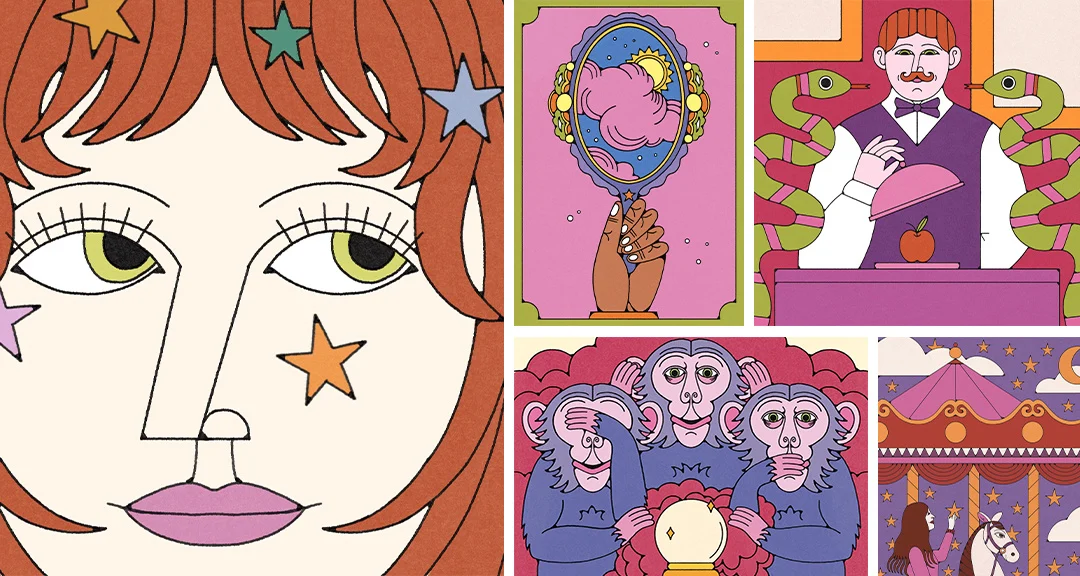
Reminiscent of the psychedelic illustrations of the 1970s, Laura Bonanno’s illustrations capture the dreamy experimentation of the time. We’re particularly fans of her unexpected color palettes of purple skies, pink clouds, and orange mustaches.